
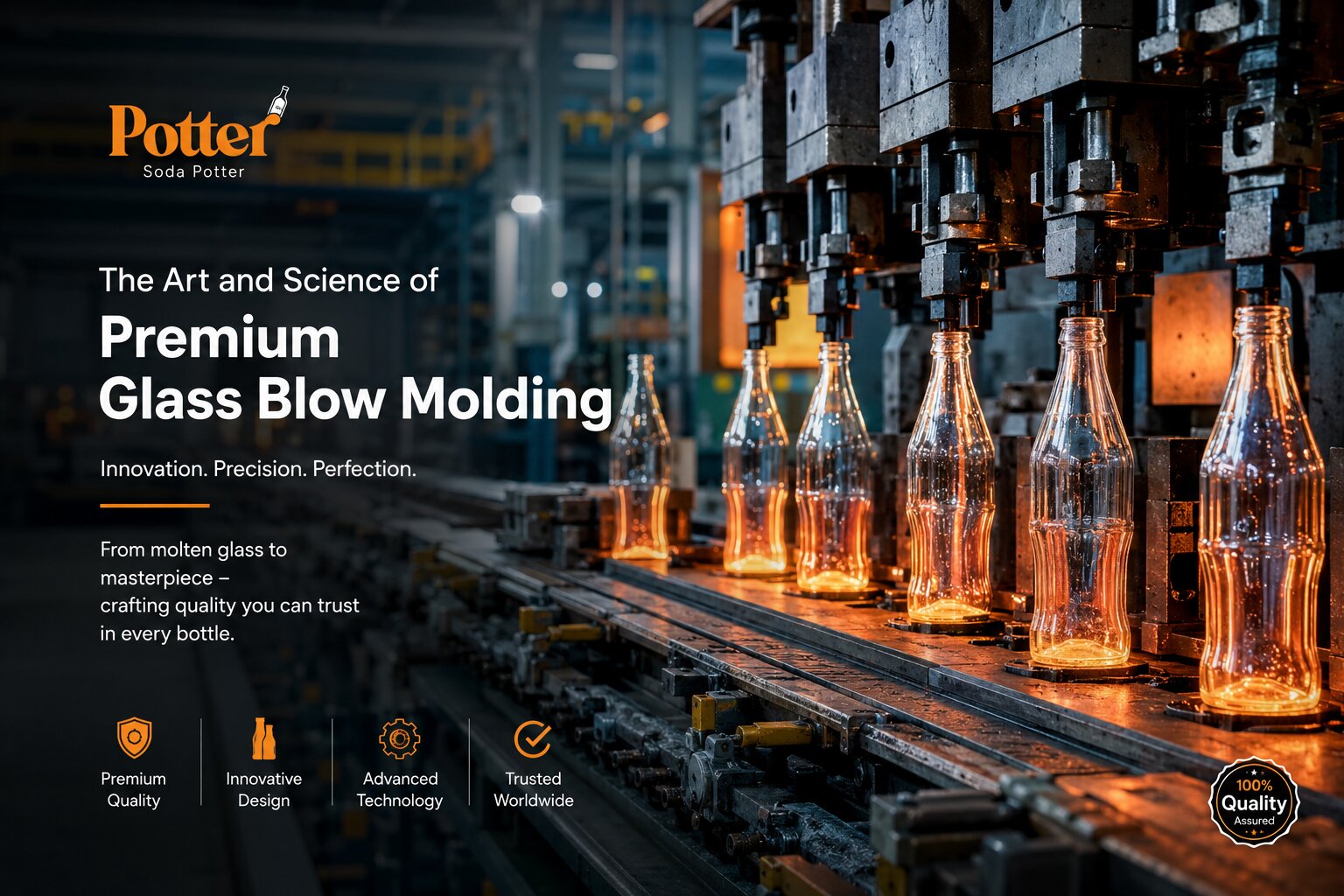
At Soda Potter, the journey of crafting a luxury beverage container begins long before the liquid meets the glass. It is a precise choreography of thermodynamics, physics, and creative design. Glass manufacturing is one of humanity’s oldest trades, but we have brought it firmly into the 21st century with cutting-edge automation, robotics, and strict quality control standards. Let us take an inside look at how we transform raw materials into premium glass bottles.
Phase 1: Raw Material Fusion and Melting
Every premium bottle starts with the finest raw ingredients: high-purity silica sand, soda ash, limestone, and cullet (recycled glass). We meticulously balance this mixture to ensure maximum clarity, structural strength, and thermal resistance. The batch is fed into our high-efficiency furnaces operating at temperatures exceeding 1,500 degrees Celsius (2,732°F). At this intense heat, the raw mixture undergoes a chemical transformation, turning into a glowing, homogeneous liquid glass mass, free of impurities.
"Precision in temperature control during the melting phase determines the final transparency and strength of the bottle. Even a minor fluctuation can introduce micro-bubbles or structural stress points." — Dr. Marcus Vance, Chief Materials Engineer
Phase 2: The Blow Molding Process
Once the molten glass is ready, it is divided into precise portions called "gobs." These gobs are guided down chutes into individual forming machines. We employ two main methods of glass blowing depending on the design requirements: Press-and-Blow (ideal for wide-mouth containers) and Blow-and-Blow (used for narrow-neck soda and beverage bottles). Compressed air is injected into the gob to form a preliminary shape known as the parison. The parison is then transferred to the final mold, where high-pressure air is blown again to force the hot glass to conform exactly to the mold’s intricate details, creating the final bottle design.
Advanced Robotics: Our molding systems employ pneumatic valves and real-time infrared cameras that check the thickness of the glass wall as it expands inside the mold, ensuring uniform distribution.
Phase 3: Stress Relief and Annealing
As the bottle leaves the mold, it cools rapidly on the exterior while remaining extremely hot on the inside. This temperature difference causes internal stress that could cause the bottle to shatter under pressure. To prevent this, the bottles pass through an annealing lehr—a long heating tunnel that slowly cools the glass at a controlled rate from 560°C down to room temperature. This stress-relief process ensures that the molecular structure of the glass is perfectly aligned, giving the container its legendary durability.
Phase 4: Multi-Stage Quality Inspection
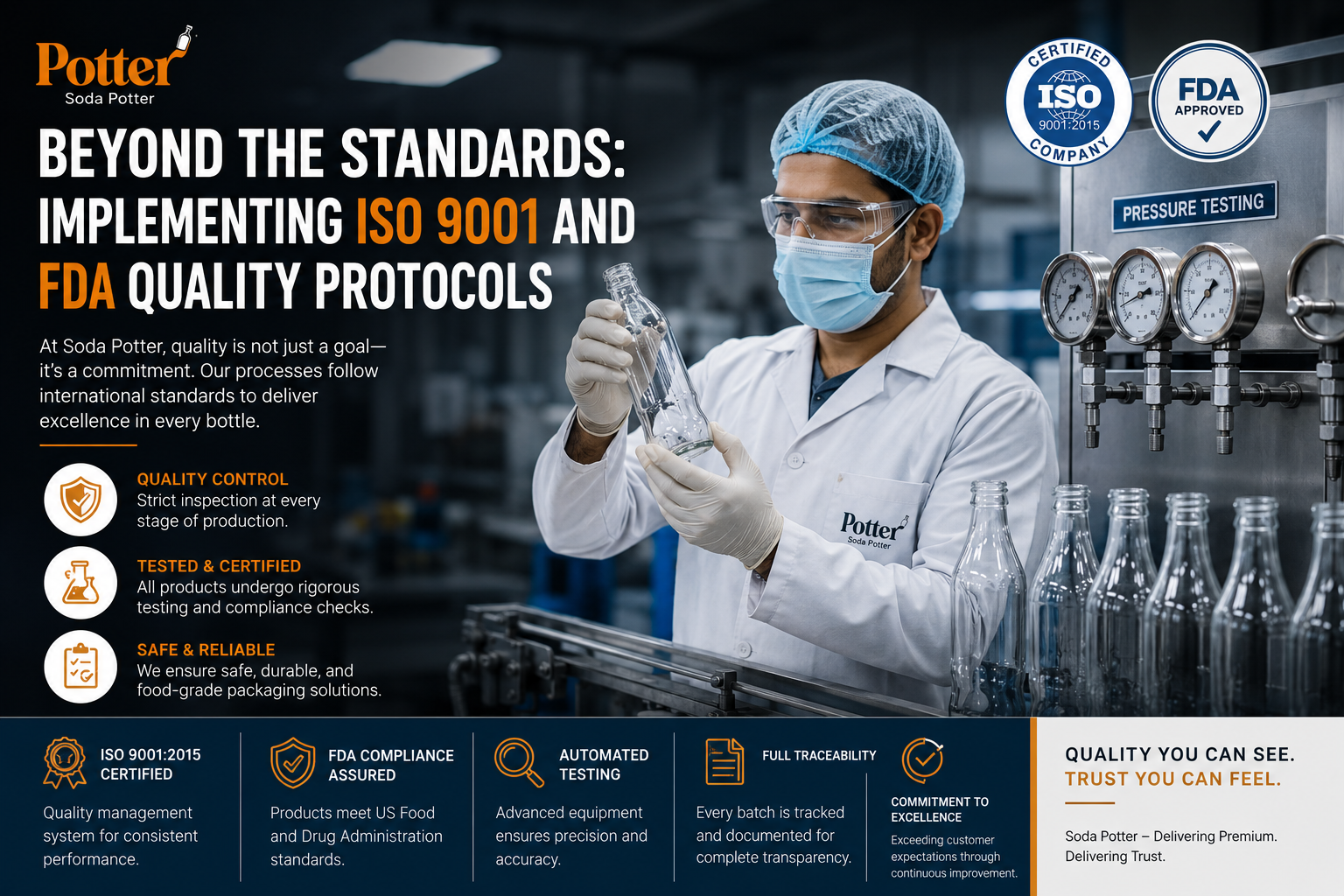
Our quality control is uncompromising. Every bottle must pass through an automated inspection line. Laser scanners measure physical dimensions, check for structural cracks, wall thickness variations, and verify neck alignments. Any container that falls short by even a fraction of a millimeter is immediately rejected and routed back to the furnace as cullet. The approved bottles are then treated with a thin, food-safe protective coating to prevent scratches during transport and labeling.
Discussion (0 Comments)
Join the conversation. Share your thoughts on this publication below.